Twisted
Have you ever had one of those light bulb moments when something you haven’t been able to wrap your brain around suddenly comes into focus? You become so blinded by your realization that you’re convinced other people can actually see a cartoon light bulb floating above your head.
I experienced one of those moments this week.
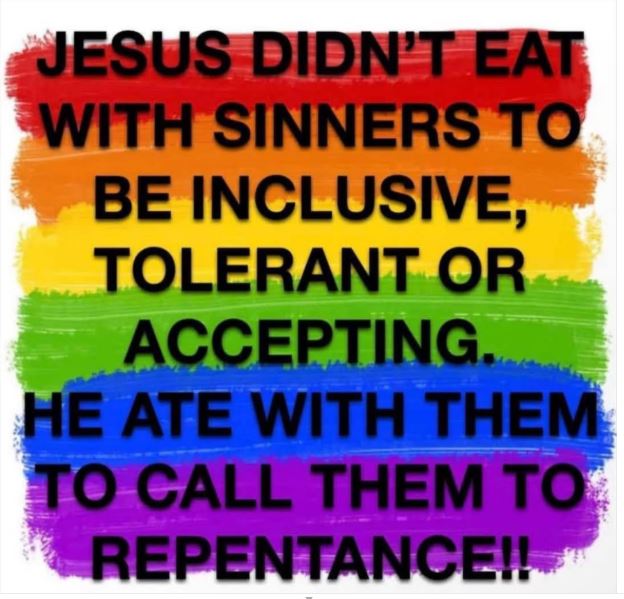
I was mindlessly scrolling through social media when I saw an absolutely disgusting post by an individual who calls themselves a “Christian.” And yes, I put Christian in quotes for a reason.
The crap this person was spouting was the exact opposite of what what I was taught about how Jesus wants us to behave, which is to care for our fellow human beings. Period.
But according to this “Christian,” the only thing Jesus cared about was that people repent for…well, I’m not sure for what. I mean, I’d say sin, but since their post was in rainbow colors and stated that Jesus didn’t believe in being inclusive, accepting, or tolerant, I’m fairly certain they were saying that being a member of the LGBTQ community is a sin.
Um.. no. How is loving another person, whether or not they are the same sex or the same color, a sin? So, what the post really was about was twisting the words of Jesus into the exact opposite of how he wanted us to live our lives.
And that was when the light bulb moment happened.
For years, I just couldn’t understand how people who call themselves Christians have embraced Donald Trump, a convicted felon, sex offender, and hate monger. But then I got it.
They have twisted the teachings of Jesus to validate their own hatred of and discomfort with anyone who is different than they are. They have turned Jesus into someone who had a clear definition of who a sinner is (anyone who believes in something they don’t or thinks differently than they do). They also believe Donald Trump was chosen by God because he validates their discomfort with anyone who challenges their belief system.
If Trump actually was chosen by God to be president, I prefer the perspective of a friend. I was struggling with a conflict that involved following social work ethics that are in direct opposition to a gubernatorial executive order. My friend, an attorney, said that the real challenge is choosing what is right or choosing what is safe.
“You know,” she said. “Maybe all of these “Christians” who think Trump was ordained by God have it right but for the wrong reason. Instead of God choosing Trump because he is following the teachings of Jesus – which he’s not – maybe it was to test Christians to see if they can actually do the right thing when they are challenged by someone who is so evil.”
I like that perspective, and it is one I need to hold onto tightly. Can I continue to do the right thing in the midst of so much wrong? I hope so. And I hope putting this in writing is the right thing to do.
There was a part of me that was nervous this post would offend someone. And then, I had another of those light bulb moments. If someone is offended that I am calling them out for their hateful beliefs, then I don’t care. I’m confident that Jesus would have called them out too.
Breaks and Scars

A piece of me broke a little this week. I’m not referring to the “segmental, comminuted, displaced fracture of the mid left clavicle” that my x-ray showed after yet another unfortunate accident involving me, my dog, a hill, and a bicyclist on Monday night. (And yes, I had to look up what that diagnosis meant because, as I told the doctor, “I’m not a doctor, I’m a social worker.”) That fracture means my collarbone is broken, but it will heal with time.
I’m not so optimistic about the other break, because the attack is ongoing.
A piece of my heart has been cracking a little bit every day since January 25. That’s when Americans who aren’t straight, able-bodied, white males saw the lights dimming on all of the progress they’ve made over the past decades. Now, I feel as though the lights are completely off and the circuit breaker is being guarded by a group of wealthy, self centered, and power hungry politicians who care more about their bank accounts than about other people or the health of our planet.
The crack turned into a break when I received a news alert from the New York Times. Ironically, I received it while attending a conference on abuse and trauma. It was ironic because the article was about words that are being taken out of federal policy and off of federal websites (Disappearing Words), and trauma and traumatic are on the list.
So are breast feed, advocacy, advocate, black, disabilities, socioeconomic, female, mental health, victim, women, systemic, health disparity, pollution, and pregnant people. You know what words aren’t on the list? Male, men, and white. As a woman, I felt as though my power was being erased. Talk about a punch to the gut.
I shared the list with the social worker who was sitting next to me. We were able to joke about some of the words, and when she asked “What are we supposed to say instead of sex (yes it is on the list), I joked, “Well the “f” word isn’t on the list, so I guess that’s just fine.” (For the record I didn’t say the “f” word I actually said THE “f” word, if you know what I mean.)
Then, the woman I was speaking with got serious. Her husband has worked for the federal government for decades, and like most federal employees, he’s scared. He is also a policy writer who has spent the last four weeks re-writing policy to ensure that the “forbidden” words are eliminated. I repeat. We, the taxpayers, are paying a federal employee to rewrite policies to eliminate words, many of which refer to ensuring all people are safe, instead of working on policies that will actually be beneficial. For an administration that has made eliminating government waste one of its top priorities, that seems, well, wasteful.
But it goes deeper than that. This is about ensuring that the balance of power is squarely in the hands of people who haven’t faced discrimination, who haven’t given birth, who haven’t lived in communities with unsafe water and air, who haven’t been assaulted, who haven’t been stopped by a police officer because of the way they look, and who haven’t been told that their identity isn’t valid.
A piece of me broke this week, and I’m not sure if it will simply heal with time like my collar bone. However, I do know it will leave a scar, and scars aren’t necessarily bad. They don’t just remind us of old wounds. They remind us of everything that we have survived and overcome. They show us how tough we can be.
Friends often joke that, based on the number of scars I’ve incurred over the years, I should probably be wrapped in bubble wrap. I laugh with them, but I know that bubble wrap is for things that are fragile, and that is one thing I will never be. I’m fierce, and the more you try to break me, the tougher I get.
Just watch.
Time Traveling
I time traveled this morning. Well, I didn’t technically time travel, but I certainly took a journey into the past.
I was chauffering my dog Jasper to his favorite park when I made an unusual decision. I turned on the radio – not to hear news updates but to listen to music. I knew full well that this was a crap shoot. I’ve grown accustomed to listening to streaming services or to my favorite music on my phone. I knew the odds were against my hearing something I liked and, even if I did, that song would be sandwiched between commercials. But when I turned on the radio, not only was I surprised, but I was thrown back 40 years in time.
Kasey Kasem was announcing that the Police’s “Wrapped Around My Finger” had moved up four spots to number 19 on the charts.
Wait! What?
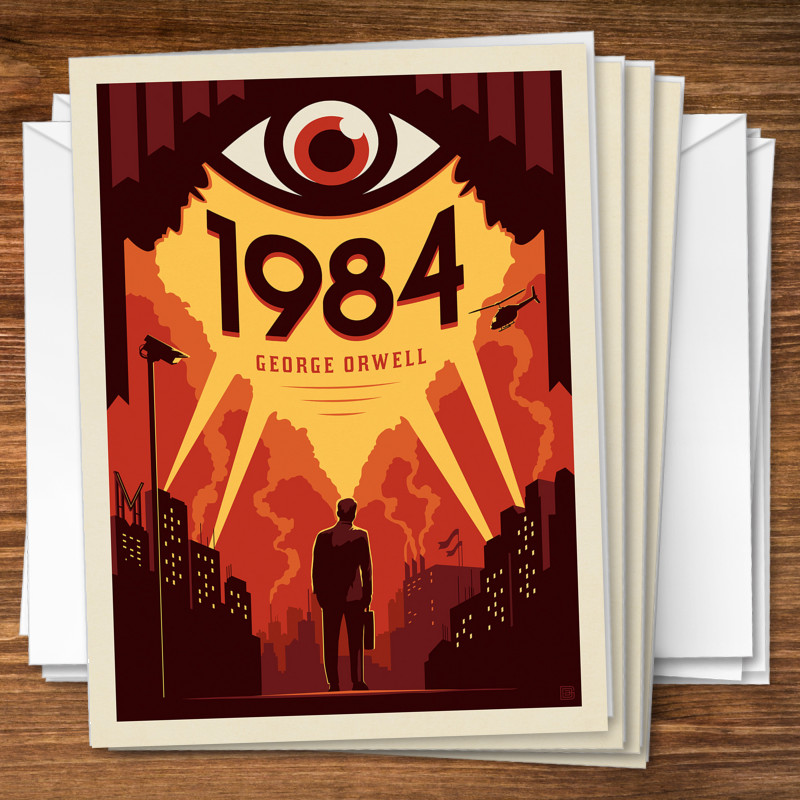
I quickly determined that the radio station was playing an American Top 40 episode from 1984. I sang along Madonna’s “Holiday” and and Billy Joel’s “An Innocent Man” with the feeling that, if I closed my eyes and opened them again, I’d be sitting on my teenage bed underneath a blue, yellow, and red Synchronicty poster.
Since I was driving and couldn’t close my eyes, I just basked in the wave of nostalgia that came over me as I connected each song with a snapshot in time: cruising in Kanawha City with the car windows down, a group of friend calling the local radio station again and again to request the same song, and feeling lucky to have great concert seats for the Police’s Synchronicity tour. The music was more than just tunes and lyrics. It was like opening a treasure box but instead of trinkets, this box was full of snippets in time that held some strong emotions.
When I turned off the engine, and with it the music, my thoughts continued to reel about how, while music is often a communal experience, it can also be a very private. Songs are like pieces of literature. The writer is telling their story, but the listener can interpret and even create their own story from that same work of art.
Forty years ago today, I was on the edge of 17 listening to the same songs on the radio that I listened to today. I thought that 40 was old, and I had no concept of how quickly that much time can pass. Forty years ago today, before the internet, or cell phones, or streaming services, I was excited that I had tickets to see the Police in concert in just over a week. And forty years ago today, I would never have guessed that, in the future, I would be able to get on this device called a laptop, find a recording that someone I didn’t know would do something called post on something called the internet, and I could listen to a moment in time I never thought I would experience again.
Yes, there is a recording of the Police Synchroncity tour in Charleston WV on February 13, 1984: Police 1984 Charleston WV.
Isn’t time travel cool?
Absolutely Nothing
When you often wake up in the middle of the night, you tend to develop a routine. Mine usually involves randomly scrolling through social media. That is how I came across one of those posts that asks an inane question that hundreds of people feel the need to answer.
Usually, I just scroll past such posts without giving them a second thought. But on this particular 3:00 AM perusal of social media, I actually stopped to read people’s answers. I’m not sure why. The question wasn’t particularly tantalizing, and the answers were fairly predictable. In fact, approximately 90% of the responses to the question “what is one thing you had in high school that you wish you still had?” were the same. Most people said either “my parents” or “my figure/former body.”
I wasn’t even remotely tempted to type my own answer, but the question got me thinking. Is there anything I had in high school that I wish I still had? My answer was a resounding “no.”
I say that as someone who is extremely fortunate. I still have my 89 year-old father and my 84 year-old mother. As for the body I used to have? I didn’t appreciate it then anyway. Even though I weighed significantly less, I was still comparing myself to other females, complaining that I was fat and worrying that my waist was too thick, my hips too wide and my butt too flat. I may have been skinnier, had smoother skin, and sported a lot fewer scars, but I wasn’t happier.
I wouldn’t trade all my experiences, good and bad, that have etched themselves into my face as wrinkles. You couldn’t pay me to take back my teenage body if that meant I never experienced the joy of giving birth to my two children. And I truly love all of my scars because they make for good conversation starters. I don’t want my teenage body back anymore than I want to be a teenager again. I’ve quite literally outgrown it.
As I was scrolling through people’s wistful responses to the question about what they wish they had from high school, my 3:00 AM brain realized how stupid that question was. It focused on the negative.
Instead, a better, and much more interesting, question would have been, “What is one thing you have now that you wish you had in high school?” I have hundreds of answers to that: self-assurance, an ability to laugh at myself, the confidence to call people out when they are wrong, a much greater acceptance of other people, a group of friends whose beliefs align with mine, a strong sense of self, the ability to trust my gut, perspective about what is truly important, the ability to stand up for what I believe, the knowledge that other people’s opinions of me don’t matter, the confidence to walk away from negative situations, and so much more.
A question about what we have and what we can share is always healthier and less anxiety provoking than one about what we miss or want.
I fell asleep pondering this, but I was still thinking about it when I woke up the next day with my father’s voice echoing in my head. As a little girl, Dad would send me to bed with the message, “The best way to fall asleep isn’t to count sheep. It’s to count your blessings.”
He was absolutely correct.
Conversation in Aisle 3

You can’t go to the grocery store in my town without planning ahead. I’m not referring to being prepared with a shopping list and coupons. I’m talking about being appropriately dressed and groomed before leaving the house. That’s because the grocery store is the one place where you are guaranteed to run into at least 10 people you know.
Since I usually go to the grocery store on the weekends but also embrace weekends as a time when I don’t have to “people,” this creates a conflict for me. I like my alone time on the weekends for many reasons, but I especially enjoy not taking a shower, putting in my contacts, or wearing anything fancier than yoga pants and a sweatshirt. Unless it’s summer. Then I wear shorts and a t-shirt. In other words, I am not looking my best on weekends unless I am forced to go out and be social. But I do have to eat, so I have had numerous internal debates about when is the best time to make a grocery run: I can go to the store early in the morning or late at night to avoid people or I can take a shower and make an attempt to look like a presentable human being. Usually, the part of me that doesn’t care what people think wins and I don’t choose either option. I just end up going to the store at the most convenient time looking a bit of a mess.
Decades ago, however, I did care. This was at a time in my life when I had a lot less free time to take care of my appearance or to choose when I would make a trip to the grocery store, especially when we had a milk (or rather a lack of milk) emergency. On one particularly evening, we had just such an emergency, and I told my husband I would make a quick milk run. I threw on a pair of work boots, which were sitting at the door and therefore were the most convenient footwear choice, and drove a short distance to the closest grocery store. It was only after I arrived that I realized how ridiculous I looked. The boots didn’t exactly go with the flannel boxer shorts and sweatshirt I was wearing (without a bra of course.) I didn’t worry too much though because I thought “no one is going to be at the store at 8:30 on a cold, Thursday night.”
I was wrong. I ended up having a ten minute conversation with someone I worked with in the community. I stood with my arms crossing my chest the whole time in fear they would notice my lack of appropriate undergarments. They probably thought my body language meant that I didn’t want to be engaged in conversation with them, which was accurate but not for the reasons they probably thought. I simply had no desire to talk to anyone in public without wearing a bra. I haven’t been caught braless in public since that time (unless you count the number of times I’ve walked the dog around my neighborhood without wearing one.)
Thankfully, this week I had a training on Friday which ended earlier than my normal work day. I took the unexpected time as an opportunity to go to the grocery store when I actually looked presentable. I hadn’t made it much farther than the produce section when I heard someone yell “Trina.” I turned around to see a woman I didn’t recognize. “Are you Trina?” she asked. When I answered in the affirmative, she motioned to the end of aisle 2. “That woman in the white t-shirt was yelling for you.” All I could see was the hint of the white t-shirt as the woman in question left aisle 2. Curious, I steered my shopping cart toward Aisle 3 guessing that was where the mystery woman had gone. I was correct.
It was a woman I know through community work but whom I hadn’t seen in several years. After a few pleasantries, she told me, “I applied for your old job when you left, but they never contacted me.” I apologized to her, but she said “Oh, I talked to one of your old co-workers and it was probably for the best.” I started telling her how I had left the position questioning my abilities and my strengths when the conversation took an unexpected turn. I had stopped talking about myself long enough to recognize that she had applied for a job and asked if she was actively looking for new employment. After she said, “not really” she began to explain her employment situation.
I won’t go into details here as it is her story to tell, but it did involve more information than I ever needed to know – including people whom she has slept with and whom other people haven’t slept with. We were having this conversation in Aisle 3. In a popular grocery store. With other people navigating their shopping carts around us. And I didn’t even think it was weird until later when I was telling a friend about it. I guess that’s because I’m used to having weird conversations in weird places with no room for judgement. That’s how my life always goes, and I love it.

Just this week, I posted an image on social media that might seem a bit vapid to some but spoke to my soul. “Imagine if we measured success by the amount of safety that people felt in our presence.” I realized that is what I have always strived for but never understood. While people around me were focused on how much money they made or having an important title, I was seeking something different. My husband calls me a “do-gooder,” but that description has never seemed accurate,. It’s not that I need to “do” good. It’s that I want other people to feel good about themselves.
And here is the thing. I left that conversation in Aisle 3 feeling good about myself (and not because I was dressed appropriately and wearing a bra) because the woman with whom I was talking is seeking the same thing. She turned a conversation about how I felt like I had failed to one that left me smiling, laughing, and confident in my ability to connect with other people.
It also left me recognizing that we all need more conversations like the one in Aisle 3.
Truth and Consequences
When I was twelve years old, these were some of my truths:

- Being a college graduate was not a life goal, it was a life requirement.
- If you were “on welfare,” you were lazy.
- People who never left their hometown were under achievers.
- Getting anything but an A on a test or a report card was a failure.
- A woman who isn’t employed outside the home isn’t living up to her potential
These weren’t really truths at all.
They were assumptions that I had formed based on a variety of circumstances. Both of my parents were college graduates, both had travelled widely before getting married, and both lived thousands of miles from their hometowns. My mom had always worked at least part time, and much of her identity was wrapped up in her job. My parents’ friends were also transplants from all over the country, and very few lived in the same community where they grew up.
They were also inferences based on my limited life experience. If I applied myself and studied, I was always rewarded with an A. My classmates who lived in public housing and came to school unprepared did poorly in school, and my parents always talked about where my brother and I would go to college not if we would.
They were opinions based on conversations I overheard when a group of adults got together. My young brain still thought that adults who were “successful” knew everything.
And so, I entered my adolescence armed with what I thought were life’s truth and with an attitude that anyone could get A’s, graduate from college, and earn a good salary if they just applied themselves.
That’s how I entered adolescence.
I left adolescence a much different person. I had sometimes done my best and failed anyway. I had been exposed people who had different ideas and different backgrounds but whom I respected. And, maybe most importantly, my simplistic ideas about right and wrong had been challenged by people who were smarter and more experienced than I was. My truths hadn’t been rooted in reality but in a warped sense of judgement that people who weren’t like me or my family were in the wrong.
On Wednesday, I was reminded about the importance of not only admitting you have been wrong, misinformed or just plain ignorant but of also being willing to change.
I was having a conversation with an acquaintance whose adult child had recently come out as transgender. We were talking about the challenge of accepting and loving our children while still trying to grasp the reality of who they are. We talked about how, when we were younger, our only exposure to people who were transgender was through pop culture when it was generally used as a device to generate humor. My most vivid memory is of the Bud Light guys who dressed up like women so they could get drink deals during ladies night at the local bar.
What we didn’t talk about was the vitriol, blame, and hate that was currently circulating on social media. Only two days earlier, an individual who was raised as a female and had recently started identifying as a male killed six people at a Christian school in Nashville Tennessee. This fact allowed judgmental, narrow-minded people with a reason to blame the transgender community. “It’s not about guns,” they screamed. “It’s about mental illness and a lack of morals.”
Last time I checked, a lot of very mentally healthy people are transgender. In fact, making the change has greatly improved their mental health. Also, the fact that I was born female and identify as female has absolutely nothing to do with my morals. Morals are about how we treat and provide positive opportunities for other people. That’s it. It’s that simple. And yet, for many people it’s not. They hold on tightly to what they know to be true: transgender people are sick, drag queens are a danger to children, and exposing young students to a statue of a naked man will create lasting damage to their psyche.
I know those aren’t truths at all. They are simply consequences of being misinformed and fearful of something that’s difficult for many to understand. It’s about being resistant to change and growth. It’s about thinking that the way you live and the choices you make are the best way to live rather than just one way to live.
I admit I get angry when I see and hear narrow-minded people making hateful comments about others’ sexual orientation, or gender identity. I struggle at not lashing back and saying “these are real people you are talking about. They are someone’s child, someone’s sibling, someone’s friend. You are the one with something morally wrong.” And then I remember who I used to be and that people can grow, change, and learn to accept our differences.
If I can change, so can others.
It’s a truth I have to hold on to tightly.
56

I turned 56 yesterday.
I am now closer to 60 than I am to 50 and closer to the end of my life than to the beginning. I’m not trying to be morbid. Its just a fact. Even though my brain still thinks I’m in my thirties, and I certainly don’t feel mature (in any sense), the math doesn’t lie. And yet, the older I get, the more I enjoy my birthdays.
I used to hate my birthdays because I felt they represented all I should have accomplished but hadn’t. Now that I’m older, I don’t necessarily worry about what I have or haven’t accomplished. Instead, I celebrate all I have learned and all of the tough lessons life has taught me not because I was accomplishing something but because I was living, making mistakes, and simply being human.
Several years ago, I celebrated my birthday by listing all of the things I had learned in almost five decades. I haven’t gone back to find that post, but I have once again been thinking about what age and experience has taught me, especially in the past few years when, in the middle of the pandemic, I was also struggling to survive an unhealthy relationship.
Don’t worry – I’m not talking about my marriage. I am fairly certain I married the most patient and tolerant man in the world who, despite all of my faults, is always there for me. I’m talking about an unhealthy work relationship. It wasn’t until a co-worker told me I was in an abusive relationship that I began to recognize it for what it was. (My co-worker made the observation as I stood holding a vase of recently delivered flowers – an apology for being treated horribly the previous day, although the card didn’t say that. It said “I hope you have a better day today.” There was no acknowledgement that the sender was the reason my previous day had been so horrible.) Up to that point, I hadn’t even considered that the cycle of abuse can occur in a work relationship – not just a romantic one.
Now that I am out of that unhealthy relationship, I can look back on it as yet another experience that made me wiser, stronger and more self-aware. I guess the same thing could be said for all of my 56 years. My life has been one long continuing education program that’s provided me with the following nuggets of wisdom (five for each decade plus six for the balance of years):
- Don’t ever, ever, ever let anyone else define who you are. Don’t let their negative words sound louder in your head than your own self talk. No one else spends 24 hours a day with you. No one else knows all of struggles you have overcome or the tough decisions you have been forced to make.
- Sing out loud every single day. Trust me – it always helps. Just last week my co-workers and I broke into a random round of camp songs, and it lifted my spirits for the rest of the day.
- Don’t let someone else’s moral code influence yours. If you feel you are doing the right thing, don’t worry about what other people think. We are all just doing our best.
- Forgive others but hold them accountable. People who are abusive or controlling are reaching for something they can’t seem to obtain. They think that pulling you down will bring them closer to what they want. It won’t.
- Don’t confuse being kind with being a doormat. When people are wrong, call them out even if people say you being unkind. There is a difference between being mean and standing up for what right or what is best.
- Spend time outside every single day. I mean it. Every single day – even if it is really cold or really hot. Walk out the door, look at the sky, breathe deep, and appreciate all God has created.
- Don’t confuse organized religion with spirituality. Organized religion was created by men trying to make sense of a confusing world or, unfortunately, often to control others. Spirituality is about connecting to a higher power and a finding a meaning greater than ourselves in life.
- Learn to laugh at yourelf and forgive yourself. I do stupid things every day, which is why my motto is “the day I don’t make a mistake is the day I’m dead.” I also amuse myself every single day. My thoughts are often ridiculous, and the things I say can be completely goofy. I am a complete klutz and I regularly fall down or trip or break something.
Instead of beating myself up– Wait, strike that, I’m always beating myself up because I’m uncoordinated. Instead of berating myself for my mistakes and misteps, I’ve learned to turn my life into an ongoing, and hopefully, entertaining anecdote. - Don’t let other people’s desire for power be a reason to let go of yours.
- Surround yourself with people who don’t need anything from you other than your genuine, true self. If you are always trying to prove yourself, hide your negative attributes, cling to an entity or organization for validation, or pretend to be someone or something your aren’t, you will never be truly happy.
- Don’t sell yourself short or compare yourself to others. Don’t think not knowing how to do something is a reason not to learn how to do it. Don’t limit possibilities. And don’t ever, ever think getting older means you should stop dreaming.
I turned 56 yesterday, and I can’t wait to see what I learn next.
How to Shut Up a Man

I was doing one of my least favorite things last week: sitting in a dental chair with a numb mouth with what felt like an interogation light in my eyes while my dentist and his assistant hovered over me with various scary looking implements.
I recently read that people in jobs that involve touching their clients need to create a bond or connection with the person for whom they are providing services. I get that when it comes to the person who does your hair. Sara, my hair dresser, is a better therapist than most therapists I know, but I have absolutely no need to pour out my heart to my dentist.
And yet, here he was, trying to make a crappy moment more chummy by inserting himself into my personal thoughts – or, in this case, the podcast I was trying to listen to in an attempt to tune out my real life situation.
“What are you listening to?” he asked.
Here’s the thing: when someone has their earphones in, that is a signal that they don’t want to engage in conversation. It’s the human version of putting a “do not disturb” sign on the door handle of a hotel room. I can understand if my dentist couldn’t see that I had them in, but I had specifically asked if it was ok to use wireless earphones in the dental chair and was assured they were fine and would not interfere with any equipment.
But even if he couldn’t read that I had absolutely no interest in engaging in small talk, I didn’t want to be rude to someone who had the potential to really hurt me. So I turned off my podcast and told him I was currently obsessed with the Murdaugh Murdaugh trial in South Carolina.
He surprised me with his knowledge of the case. Thankfully, he didn’t expect me, with my numb and drooling mouth, to explain it to his assistance, who said she loved true crime but didn’t know that case. I missed some of what he said as I pondered how anyone would be interested in true crime and NOT know about the Murdaugh saga, But then he drew me back into the conversation, “I can’t believe that in this day and age, there are still good old boys who get away with so much.”
He was looking at me for a response, and without thinking I said, “That’s because you aren’t female.”
He actually seemed shocked as though he thought I should have appreciated the fact that he was calling out the good old boy system. He reacted as though I were saying he was part of it. He even stopped trying to make small talk.
In truth, I really hadn’t made the comment to make him feel bad or call him out on anything. I was simply making an observation that he has never been affected by the good old boy mentality in a way that I, and most women I know, have.
I’ve quit a job because the male CEO never even asked his female employees if they were interested in his position when he retired. Instead, he came to us and said, “I know the perfect person to take over the organization when I leave.” Of course it was a white guy just like him who didn’t have nearly as much relevant experience as the women who already worked at the organization. I have had sit in silence listening to the verbal back slapping and one upmanship of men who have turned to me and asked if I could get them something to drink. I’ve even had to tolerate a community leader who insisted on calling me Mrs. Snyder (my husband’s last name) even though he knew that wasn’t my last name. It was his way of putting me “in my place.”
And none of that even touches on the sexual harrassment and discrimination I’ve endured in a system built by and for white men.
My dentist never followed up on my comment, but if he had, I probably would have said something like this: people in power want to stay in power. Until a few decades ago, doing favors for each other while ignoring wrong doings was how men got what they wanted. That doesn’t change in a few decades, especially in communities where that power generates fear and keeps everyone “in their place.” Even worse, in the past few years, I’ve seen women using the same tactics to gain power and control over others.
I think that is why my immediate reaction to his disbelief that the good old boy network still exists was to tell him that’s because he doesn’t have to see it.
I can only hope that maybe, just maybe, the reason he was so quiet during the rest of my appointment was not because he was upset with me or my reaction but because instead of talking, he was thinking about what I’d said. And hopefully, he also understood just a little bit more than he had before.
Huh?

A few years ago, a former colleague commented on a photo of my daughter. “She is so pretty and talented, she won’t have any problem finding a husband.”
“Huh?”
That was literally my reaction: “Huh?”
The comment about my daughter wasn’t made in the 1950’s. It was made in the 2020’s. Who the heck cares if my daughter ever gets married, or if she does, if she marries a man?
I knew responding to this person with a “huh?” wouldn’t have mattered. This same person’s whole identity seemed to be wrapped up in her husband to the extent that she rarely went anywhere but work without him. In fact, even when she went to work, she often dragged him with her as a volunteer.
My internal reaction to her prattling on about her husband was usually “huh?” To clarify, this wasn’t because she was talking about her husband. I mean, I talk about my husband all the time. That’s what you do when you are in a relationship. What bothered me was the way she talked about her husband. She obviously didn’t think she was a complete person without him and that her marriage to him was what defined her.
Even though I internally rolled my eyes at her backwards beliefs, there was a part of me that felt sorry for her. She had never outgrown that myth that many of us were fed as young girls: some day your prince will come and you will live happily ever after.
Thank goodness my mom told me early on that was a load of crap, and thank goodness my dad encouraged me to always be able to take care of myself. That was how I was raised: get an education and never expect that you can rely on anyone but yourself. I thought that was normal until I discovered how many of my peers were raised differently. There were numerous times that I was shocked when a smart, talented young woman put a relationship before education and career.
“Huh?”
Of course, these women usually didn’t have a mom who told them that needing a man to be complete was a load of crap or a dad who championed his daughter’s independence. Their parents had actually told them they didn’t need to worry about getting a good education if they found a good man or that going to college was a great place to find someone to marry.
“Huh?”
In hindsight, I was extremely fortunate to have parents who had the same expectations of me that they had for my brother. Even though I am very strong willed and I can’t imagine thinking I needed someone else to define me, but who really knows. Maybe I would be a completely different person if my parents had encouraged me to wear makeup instead of encouraging me to be my own person.
I know I shouldn’t judge women like my former colleague who see marriage (and then children) as what makes them successful. If they are truly happy, then good for them. What bothers me is putting that old-fashioned ideal on the next generation, which is what actually prompted me to write this.
Recently, I saw a Facebook post from someone who is the same age as me. Her daughter, who is is in her very early twenties, was getting married, and the post was “I always prayed that “Mary” would meet a wonderful man one day. God is working in her life.”
Huh?
Should she be happy and joyful and celebrating? Absolutely. But praying that your daughter would marry a good man? Really?
How about praying that your daughter will give back to the world more than she takes? How about praying your daughter will learn to navigate the tough world with the knowledge that she is strong enough to handle difficult times. How about praying that everyone will treat your daughter with the same respect and expectations that they treat your son? How about praying that your daughter has a such a sense of self that she will never consider getting married as something she needs to do to be a complete person.
Don’t get me wrong. I am not against marriage, or relationships or motherhood. I think they are all great. I just don’t understand how some people still hold on to the belief that women have to have these to be complete or fulfilled or happy.
In other words…
“Huh?”
Giving Up or Letting Go?

I love podcasts. I seriously don’t know how I once managed to get through walks in the woods with my dog, regular household chores and long car drives without them. They are amazing. I can be productive AND entertained AND informed by just popping in my wireless earphones and going about my business.
I especially like the ones in which I feel like I’m eavesdropping on a conversation with good friends. The hosts don’t pretend they are perfect and sometimes talk about some of the same struggles I often face. These aren’t polished productions with professionals who guarantee they will provide the best advice about how to improve our lives, our budgets, our families, and whatever else self-help gurus talk about. I don’t need anyone telling me my life would be so much better if I just did “this” – whatever the latest, shiniest “this” is.
The podcasts that I prefer don’t have origins in board rooms with the primary purpose being to create productions that ensure shareholders and CEOs get even wealthier. My favorite podcasts started out in basements or at kitchen tables or in living rooms in which the hosts just want to tell stories or talk about something interesting. They don’t need fancy productions or perfectly polished delivery. They just need to be relatable, and relatable they are.
Just this week, the hosts of a podcast I regularly listen to were talking about New Year’s resolutions with a twist: instead of trying to do something new or better you choose something to let go. (This wasn’t the primary content – it was just a conversation the hosts had before they delivered the primary content. Again – I’m not into self-help as entertainment.) They weren’t discussing giving up something – like junk food or drinking alcohol or watching too much television. They were talking about something completely different.
Up until then, I’d never thought about how giving up and letting aren’t the same thing. Giving up can be good (I’m giving up candy) or it can be bad (I’m giving up trying to write the great American novel.) Letting go is about lifting a self-imposed weight that drags you down.
Giving up is about making a sacrifice, like people do during Lent, or about failure. It’s rooted in negativity and requires regular, conscious, decision-making. It’s about trying to maintain control in a chaotic world. Letting go isn’t about sacrifice at all. It’s about choosing to not think or worry about something that generally serves no helpful purpose.
I love this perspective because, like many people, there is so much I need to let go of: automatically feeling like I fall short when I compare myself to others; worrying that I could have done a better job raising my kids; ruminating over past decisions; obsessing about people who have treated me poorly or about people I’ve treated poorly. None of that is helpful to me or anyone else. It serves no purpose other than to create obstacles to appreciating all of the things I do right and enjoying life to its fullest.
In 2023, I’ll do my best to let go because I am at a point in my life that I don’t want to give up things I love (like podcasts). Besides, giving up seems to be more about what you show the outside world you can or can’t do. Letting go is about the stories we tell ourselves. This year, let’s all tell ourselves some great stories.


 Just So You Know